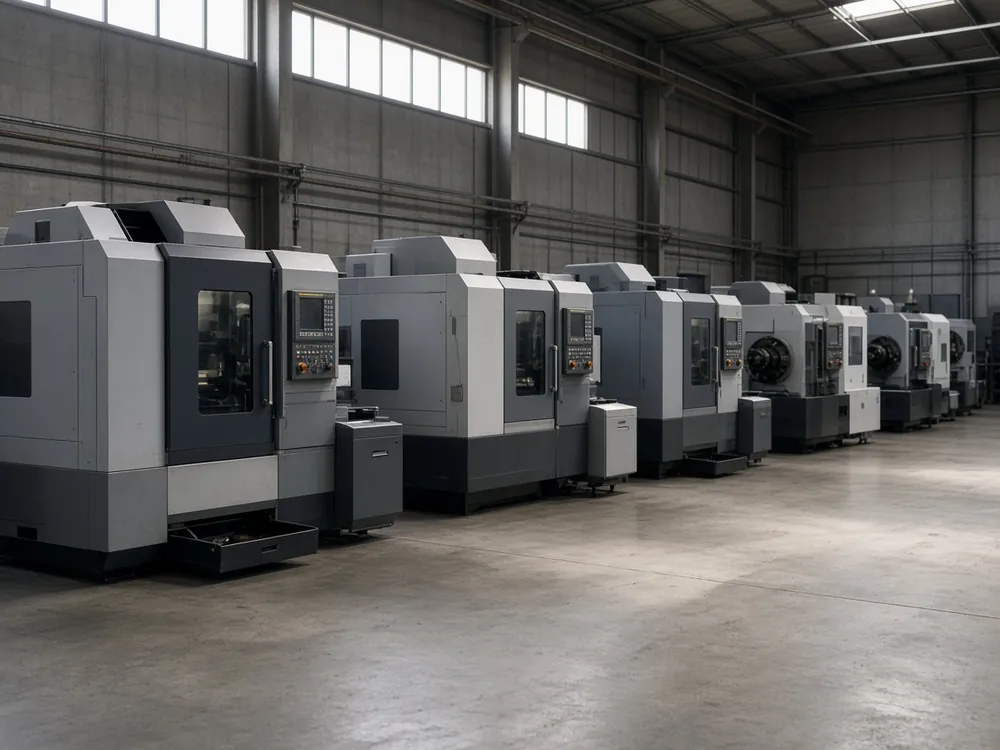
You’ve got a quote on a used VMC or lathe that “looks clean.” The seller wants a deposit this week. Your estimator already priced jobs against that spindle. And nobody on the floor has put a dial indicator on the taper yet.
That’s how New England shops lose money on used CNC — not on the sticker, on the surprises after the truck leaves.
This is the checklist I use before money moves. No theater. Just what actually matters on iron that’s already earned its keep.
What actually matters on used gear
Forget glossy listing photos and “low hours” as a headline. On used CNC, these are the items that change a buy into a walk.
1. Hours — and which clock you’re reading
- Spindle hours and power-on hours are not the same number. Ask for both.
- A machine with high power-on and modest spindle time can still be fine if it sat warm in a clean bay. A machine with low power-on and hard spindle time in abrasive material is a different animal.
- Ask what the shop cut: aluminum vs stainless vs Inconel vs cast iron. Abrasive work eats ways, scrapers, and seals faster than hours alone show.
If the seller can’t pull hours from the control (or a maintenance log), treat that as a signal — not a deal-breaker by itself, but you dig deeper on wear.
2. Control — version, options, backups
- Note the control family and software version (Fanuc, Haas NGC/Classic, Mazatrol, OSP, Mitsubishi, Siemens, etc.).
- Confirm options that matter on your work: rigid tapping, high-speed look-ahead, probing, 4th/5th axis prep, live tooling, Y-axis, subspindle, bar feeder interface.
- Ask for a parameter backup and ladder/PMC notes if applicable. A machine without a recoverable backup is a future weekend you don’t want.
- Check that the screen, MDI, and I/O behave — dead softkeys and flaky MPGs show up after you own it.
3. Tooling package — what’s on the machine vs what’s “available”
- ATC / turret capacity vs what’s actually included in the sale.
- Toolholders, collets, jaws, steady rests, tailstock, chip conveyor, coolant tank condition, through-spindle coolant hardware.
- “Tooling available separately” often means you’re buying a bare spindle and rebuilding the package at full price.
Price the complete cutting package, not the base iron.
4. Wear surfaces
Walk the machine like a mechanic, not a photographer:
- Way covers, scrapers, and evidence of way oil reaching the surfaces
- Ballscrew boots and bellows — torn boots = grit in the race
- Gib adjustment history (if anyone will admit it)
- Spindle taper condition (30/40/50 taper or HSK — look for fretting, galling, witness marks)
- Turret coupling / curvic coupling faces on lathes
- Chip pan rust that tells you coolant chemistry was ignored for years
Wear you can see is cheaper than wear you discover on the first tight-tolerance job.
5. Runout
Bring or borrow metrology that belongs on a shop floor:
- Spindle TIR in the taper (clean taper, proper test bar or qualified holder)
- Toolholder face / flange seating if the design calls for it
- On lathes: spindle nose runout, chuck mount face, and a quick check on a known test bar if one exists
You’re not certifying the machine to ISO in the seller’s aisle. You’re screening for a spindle or taper that already failed.
6. Clocks — geometry that shows up in parts
When the buy is big enough, or the work is tight:
- Ballbar (circularity / servo match) if the seller will allow a short test
- Level and geometry notes — especially on machines that were moved without a proper re-level
- Axis backlash / lost motion checks the control can report, plus a physical indicator check on a known surface
If your work lives inside a few tenths on position, don’t skip geometry because the paint is nice.
7. Documentation
Worth real money:
- Original manuals (mech + electrical)
- Maintenance logs, spindle rebuild invoices, ballscrew replacements
- Parameter sheets / backup media
- Alignment or ballbar reports from the last move
- Any OEM or third-party service history with dates and part numbers
No docs doesn’t kill every deal. It does change what you pay and what you budget for risk.
8. Photos that matter (send these — not vanity angles)
If you’re remote or I’m helping you screen a listing, these photos beat a walkaround reel:
- Control screen showing hours / software version
- Spindle taper (lit, clean, close)
- Way covers open if safe — oil evidence
- Ballscrew boots on X/Y/Z
- Chip conveyor / tank (sludge tells a story)
- Electrical cabinet (neat vs rodent / burned insulation)
- Full machine plate (model, serial, build year)
- Any crack, weld, or “shop repair” on the casting or guarding
Vanity corner shots sell machines to people who don’t cut parts. Shop photos sell machines to people who do.
How I inspect (metrology language, not influencer)
I work out of Taunton, MA and look at New England iron the same way I’d expect a purchasing guy to defend the PO.
Order of operations:
- Identity — plate, serial, control version, options list vs what’s powered.
- History — hours, materials, rebuilds, why it’s for sale (capacity change vs “we’re done fighting it”).
- Cleanliness as evidence — not for Instagram; coolant smell, way oil, cabinet dust, and taper condition are process signals.
- Static geometry — level feel, axis handwheel/MPG behavior, unusual noise on jog.
- Spindle / taper — visual + TIR if we can get a clean check.
- Functional — tool change, pallet/door interlocks, coolant, conveyor, probing cycle if equipped.
- Risk register — list what would cost money in the first 90 days (seals, boots, conveyor, battery-backed memory, missing tooling).
I talk in TIR, backlash, lost motion, taper condition, parameter backup, and spindle hours — not “vibes” and not “she runs great.” If a seller pushes emotion over numbers, I slow down.
When the deal involves incoming part risk — first-article on a new program, print callouts you can’t miss, or proving a fixture before you wire the machine into production — that’s when sister work at aiinspectiontools.com matters: CMM / FAI / dimensional prove-out on the parts, separate from machine condition notes on the iron. Don’t conflate the two. A pretty spindle still ships scrap if your inspection plan is weak.
What I’d pay vs what I’d walk away from
Every deal is local, but the framework is stable.
I’ll pay (or stay in the fight) when:
- Hours and materials history are coherent with what I see on wear surfaces
- Control options match the work you’re buying the machine to do
- Tooling package is real, inventoried, and priced into the deal
- Taper and basic runout don’t scare you
- Docs or a clean parameter backup exist
- Seller allows a proper look (and a short geometry check on bigger tickets)
- Price leaves room for a known 90-day punch list (boots, scrapers, tank clean, missing holders)
I walk (or price it like scrap-with-a-motor) when:
- Seller blocks taper photos, cabinet access, or hour screens
- Spindle noise, taper fretting, or obvious crash evidence with “it was always like that”
- Control is orphaned — no backup, no ladder notes, dead options you need
- Machine was flood-damaged, fire-damaged, or “rebuilt” with no paperwork
- Geometry is off and the price assumes “just needs a level”
- The only selling point is paint, a fresh chip bag, and urgency
Rule of thumb I use with shops: if the discount vs a known-good comparable doesn’t cover the risk register plus move/rig/relevel, you’re not buying a bargain — you’re buying a project. Projects are fine when you mean to buy a project. They’re expensive when you thought you bought production capacity.
If the honest answer is “it’s scrap,” machineshopscrap.com handles shop scrap and solids. For fair-market framing and deal flow across New England, I run the used-equipment side through usedcnctools.com — buy, sell, and package deals with honest condition notes, not mystery iron.
Soft next step
If you’re staring at a listing and need a second set of shop eyes before the deposit:
- Send make / model / year / serial, hours (both clocks if you have them), options, and the photo set above.
- Start at usedcnctools.com — used CNC for New England shops, Taunton MA base.
- Call or text 508-343-1219 (photos by text are fine)
I’ll tell you straight whether I’d pay, renegotiate, or walk — and what I’d budget after the truck.
Want this as a one-page clipboard sheet? Grab the free Used CNC Buy Scorecard.
FAQ — questions a purchasing guy actually asks
1) What’s the single biggest red flag on a used CNC walkthrough?
A seller who won’t let you see the taper, the hour screens, or the electrical cabinet. Cosmetic cleanliness with blocked access usually means the risk is elsewhere.
2) Are low hours always better?
No. Low hours in a dirty process (abrasive, poor way lube, ignored coolant) can beat a higher-hour machine that was maintained. Read hours with materials, boots, scrapers, and taper condition.
3) Do I need a ballbar before every purchase?
Not on every small deal. On machines that will hold tight positional work — or anything you’re moving across state lines into a production cell — a ballbar or equivalent geometry check is cheap insurance compared to scrap and missed ship dates.
4) Should I buy without a tooling package to save money?
Only if you’ve already priced a full holder/jaw/collet rebuild and your schedule can absorb it. A “cheap” bare machine often loses the savings in the first tooling PO.
5) How do spindle rebuilds affect value?
A documented rebuild with dates, parts, and runout after install can support the price. A verbal “we rebuilt it” without paperwork gets discounted. Ask who did the work and whether the taper was reground or replaced.
6) We’re buying remote (photos only). What’s the minimum package?
Plate, control hours/version screen, taper close-ups, boots, tank/conveyor, cabinet, and any crash or weld evidence. If the seller won’t shoot those, assume you’re negotiating blind — and price accordingly or pass.
7) When does inspection / FAI belong in the conversation?
When the parts — not just the machine — carry the risk: new program prove-out, tight print callouts, PPAP-style needs, or fixture buyoff. Machine condition and part metrology are different scopes; for dimensional / FAI work see aiinspectiontools.com.
8) Can you help sell a machine we’re replacing?
Yes. Same photo and data package works in reverse. List through usedcnctools.com (sell / valuation) or call or text details to 508-343-1219. Clean documentation and honest photos move iron faster than optimism.
Call or text 508-343-1219 · Taunton, MA